Your Account
New to TPH?
Sign up here
India's Leading and Most Trusted
Industrial Re-Commerce Platform.




Experience The Future Of Industrial Re-Commerce
Let us help you, kindly fill in the details and our team will get back to you.




Every Production Delay Tells a Story
It usually starts with a
single phone call from the shop floor. “The machine has stopped." The
maintenance team quickly finds the problem. It isn't a major breakdown or a
complex repair. It's just one spare part that needs to be replaced. Everyone
knows exactly what is required, but there is one problem—the part isn't
available in the store. The procurement team immediately contacts suppliers,
hoping for a quick solution. Instead, they hear the words no buyer wants to
hear: "Delivery will take four to six weeks." Suddenly, one small
component becomes a much bigger problem. Production slows down, delivery
schedules are affected, customers are waiting, and every passing day adds to
the overall cost. For industrial buyers, moments like these are all too
familiar.
In situations like this,
buyers are not searching for the cheapest product. They are searching for a
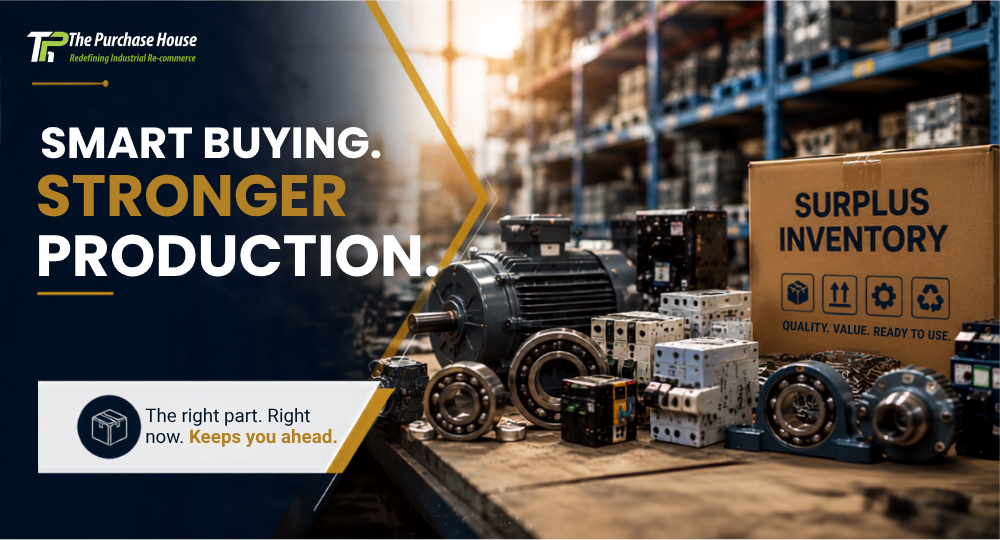
solution that is available today. This is where surplus inventory
becomes more than just unused stock. It becomes an opportunity to keep
production moving.
What Is Surplus Inventory?
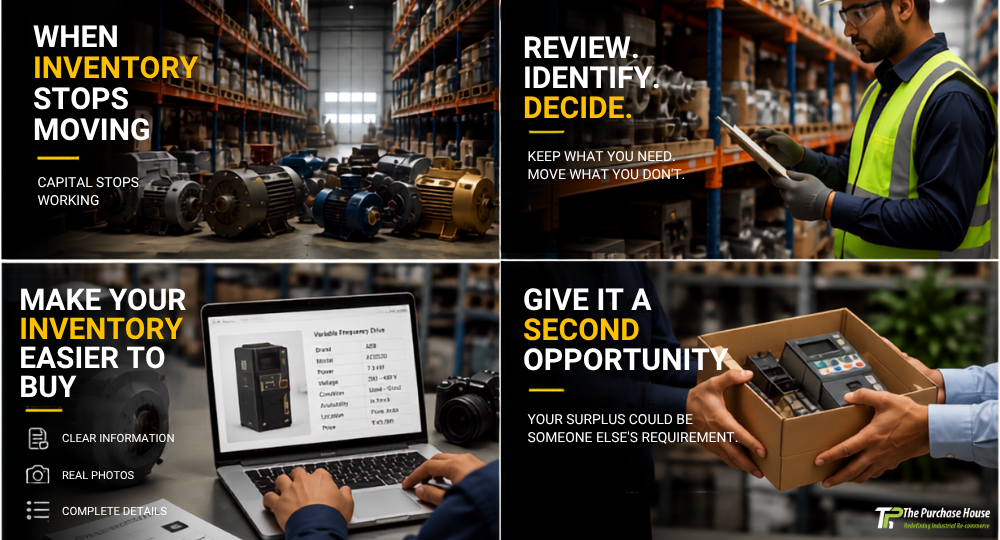
Surplus inventory includes
industrial products, electrical spares, PLCs, motors, bearings, automation components,
machine accessories, chemicals, and maintenance materials that are no longer
required by one company but are still perfectly usable. These products often
become available because a project has been completed, a machine has been
upgraded, production plans have changed, or extra stock was purchased as a
safety measure.
The products haven't lost
their quality. They've simply lost their purpose for one business. For another
business, however, they could be exactly what's needed.
Why More Buyers Are Looking at Surplus Inventory
Manufacturing doesn't stop for
procurement delays. When production is waiting, every hour matters. That is why
many industrial buyers are beginning to look beyond traditional purchasing
methods and exploring surplus inventory as a practical solution. Instead of
waiting weeks for new stock, buyers can often find the same component already
available with another manufacturer. Whether it's an electrical spare, a
gearbox, a PLC, a bearing, a motor, or an automation component, ready stock can
make all the difference when time is critical. Sometimes, the biggest advantage
isn't paying less. It's getting the right part exactly when you need it.
When Time Matters More Than Price
Industrial procurement has
never been only about finding the lowest quotation. It's about keeping
production running. A single motor that is available today can save far more
than its purchase price if it prevents days of downtime.
A discontinued PLC module
sitting unused in another company's warehouse could help restart your
production line within hours. A bearing, sensor, or electrical component that
someone else no longer needs could become the reason your customer receives
their order on time. That is the real value of surplus inventory. It isn't just
about saving money. It's about protecting your operations.
Buy with Confidence, Not Uncertainty
Buying surplus inventory
should never feel like taking a risk. A responsible seller understands that
buyers need confidence before making a decision. That confidence comes from
clear and transparent information. Before purchasing, buyers should always
check:
The more information available,
the easier it becomes to make the right decision. Transparency builds trust. And
trust builds long-term business relationships.
Chemical Inventory Deserves Extra Attention
Chemical inventory requires a
little more care than other industrial products. Every chemical has a shelf
life, and buyers should always verify the manufacturing date, expiry date,
remaining usable life, and storage conditions before purchasing. A chemical
with sufficient remaining shelf life offers better value and gives buyers
confidence that it can be safely used within their production process. A few
minutes spent checking these details can prevent much bigger problems later.
Good Documentation Makes Every Purchase Easier
One of the first things
experienced buyers ask for is documentation. Inspection reports, test
certificates, invoices, product specifications, and photographs provide
confidence that the material matches the requirement. Good documentation
reduces uncertainty. It speeds up approvals. And it helps buyers make informed
procurement decisions without unnecessary delays.
Smart Procurement Is About Making Better Decisions
Today's industrial buyers are
expected to do much more than purchase materials. They are expected to reduce
costs, avoid downtime, improve efficiency, and ensure production continues
without interruption. Surplus inventory supports all of these goals.
It provides faster
availability, shorter lead times, reliable industrial products, and an
opportunity to make procurement smarter rather than simply cheaper. Sometimes,
the best solution isn't waiting for something new to be manufactured.
Sometimes, the solution is
already sitting on a warehouse shelf—waiting for the right buyer. Every
industrial buyer understands that production cannot wait. Every delay has a
cost, and every smart procurement decision has value. Surplus inventory gives
buyers access to quality industrial products without unnecessary waiting,
helping businesses reduce downtime, improve operational efficiency, and respond
quickly when unexpected requirements arise.
At The Purchase House (TPH),
we believe that valuable industrial products should never remain unused when
they can help another business keep moving forward. By connecting genuine
buyers with trusted sellers, TPH makes it easier to find quality surplus
inventory while creating value for industries across India. Because sometimes,
the smartest purchase isn't the newest product.
It's the right product, available at the right time.

 Looking for a machine?
✕
Looking for a machine?
✕
How can I help you today?