Your Account
New to TPH?
Sign up here
India's Leading and Most Trusted
Industrial Re-Commerce Platform.



Experience The Future Of Industrial Re-Commerce
Let us help you, kindly fill in the details and our team will get back to you.

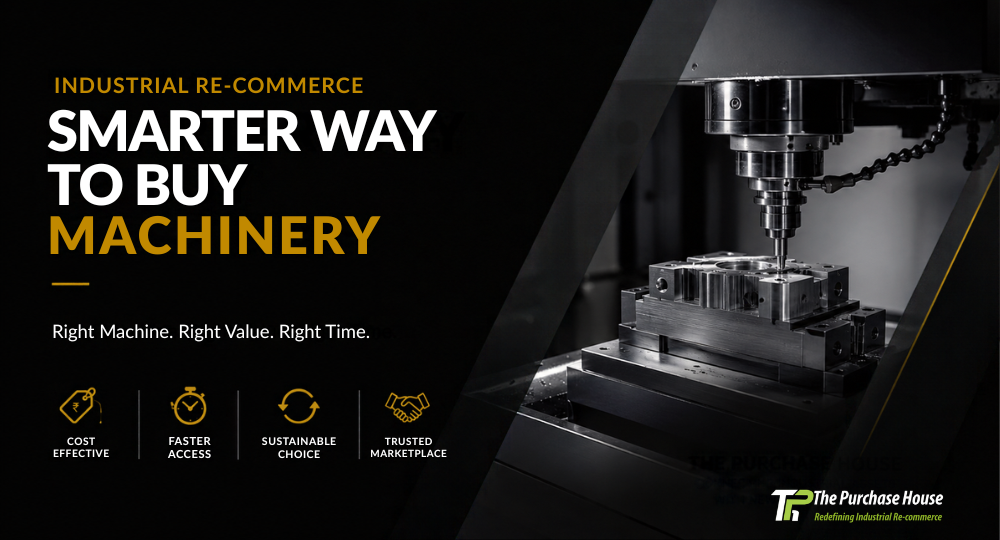
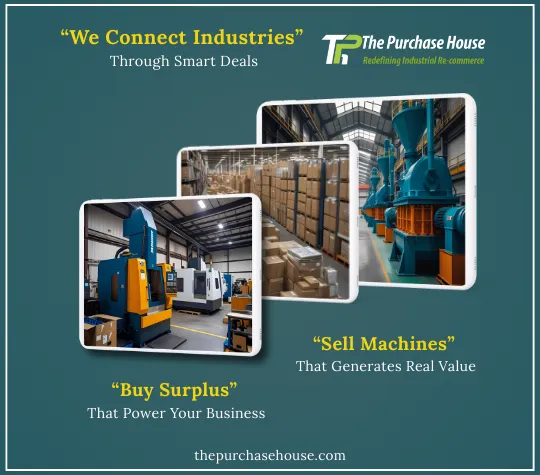
Buying industrial machinery has traditionally been a straightforward process. A company identifies a requirement, searches for a manufacturer or dealer, compares specifications, discusses the price, and places an order. But today, that process is becoming more flexible. Manufacturers are no longer looking only at brand-new equipment. Many businesses are exploring used machinery, surplus machinery, refurbished equipment, and pre-owned industrial machines as practical alternatives for their production requirements. This change is not simply about reducing costs. It reflects a broader shift in how businesses think about industrial assets, procurement, and the value of equipment that is already available in the market.
And this is where Industrial Re-Commerce is becoming increasingly relevant.
Industrial re-commerce is the process of giving existing industrial assets another opportunity to create value. A machine that is no longer required by one company may still be capable of performing its intended job. Instead of remaining idle, occupying valuable factory space, or being discarded, it can move into another production environment where it is still needed. Consider a CNC machine that a manufacturer replaces while upgrading its production line. The machine may no longer fit the company's future plans, but that does not necessarily mean its productive life is over. Another manufacturer may be looking for the same type of equipment. Industrial re-commerce helps bring these two situations together, creating a market where industrial assets can move from where they are no longer needed to where they can still create value.
One of the biggest reasons is the investment involved in purchasing industrial equipment.
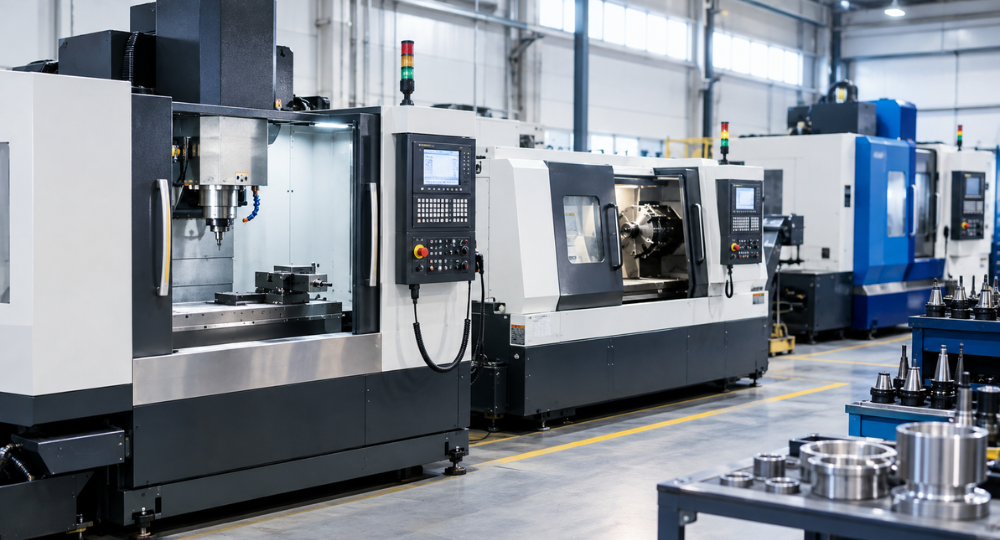
A new CNC machine, VMC, HMC, lathe, grinding machine, or other specialised equipment can require significant capital. For businesses expanding operations, setting up a new production line, or increasing capacity, managing that investment carefully becomes important. A good-quality used industrial machine can provide another option. Depending on its age, condition, specifications, brand, and maintenance history, a pre-owned machine may offer the required production capability at a more practical investment than purchasing new equipment. The capital saved can potentially be directed towards tooling, automation, maintenance, manpower, technology upgrades, or other areas that support business growth.
However, buying used machinery should never be based on price alone. Machine condition, service history, spare-part availability, specifications, application, and expected performance all need to be considered. The objective is not simply to find the cheapest machine. It is to find the right machine for the right requirement and value.
Investment is only one part of the decision. Time is another. Manufacturing businesses often work around demanding production schedules. When customer demand increases or an existing machine becomes unavailable, waiting for a new machine to be manufactured and delivered may not always be practical. This is where pre-owned machinery can offer an advantage. A machine that is already available in the market can sometimes help businesses add production capacity without going through the entire manufacturing and delivery cycle of new equipment.
For companies dealing with urgent production requirements, this availability can make the procurement process more flexible and responsive.
Surplus machinery can arise for many reasons. A company may relocate its plant, upgrade technology, change its manufacturing process, complete a project, reduce production capacity, or discontinue a particular operation.
In such situations, the equipment may simply no longer fit the owner's current business plans. This creates an important distinction between unused and unusable. A machine can be sitting idle without being obsolete. For the owner, selling surplus machinery can help recover value from an asset that is no longer contributing to current operations. It can also free up valuable factory space and reduce the burden of maintaining equipment that is no longer part of the production plan. For another manufacturer, that same machine may still have years of productive use ahead.
Industrial procurement is no longer limited to established suppliers, dealer networks, or local business contacts. Digital marketplaces are giving businesses another way to discover industrial equipment and connect with potential buyers and sellers. For a manufacturer looking for a used CNC machine, VMC, HMC, lathe, or other industrial equipment, a wider marketplace can make the search more efficient. Businesses can explore machines from different locations and compare options based on specifications, condition, availability, and application. Platforms such as The Purchase House are helping create this connection between businesses looking to sell used or surplus machinery and those searching for equipment that fits their requirements.
Digital platforms do not replace machine inspection or technical evaluation. Instead, they simplify the discovery and connection stage of industrial procurement, helping buyers and sellers find relevant opportunities more efficiently.
There is also a sustainability dimension to this changing market. Manufacturing a new machine involves raw materials, energy, production processes, transportation, and other resources. When an existing machine continues operating for longer, its productive life is extended and the value of the resources already invested in that equipment can be retained. This connects industrial re-commerce with the broader principles of the circular economy.
This does not mean businesses should stop purchasing new machinery. New equipment remains essential when manufacturers need advanced technology, higher automation, improved efficiency, or capabilities that existing machines cannot provide. Instead, industrial re-commerce encourages businesses to ask another question before making a purchasing decision: Can an existing machine already meet this requirement? If the answer is yes, extending its productive use can make both commercial and environmental sense.
The future of industrial machinery procurement is unlikely to be simply about choosing between new and used. Instead of asking only, “Which new machine should we buy?”, businesses can also ask, “What is the most suitable equipment available for this requirement?” Industrial re-commerce is therefore becoming more than a way to buy or sell used equipment. It represents a change in how businesses look at machinery — not only as an asset owned by one company, but as equipment that can continue creating value in different production environments. For buyers, this means having more options when searching for the right equipment. For sellers, it means there may be an opportunity to recover value from machinery that no longer fits their operations.
The smarter question is not always, “Should we buy new?” It is, “What equipment makes the most sense for the requirement?” That is what makes Industrial Re-Commerce a more connected, practical, and circular approach to industrial procurement. The Purchase House — Connecting Industrial Assets with New Opportunities.

 Looking for a machine?
✕
Looking for a machine?
✕
How can I help you today?